
Understanding the challenge
Greenpeace had already completed extensive research into plastic pollution and developed a clear campaign strategy focused on strengthening environmental legislation.
The challenge was turning that research into something people could easily engage with.
The campaign needed to educate users about the impact of plastic pollution while simultaneously encouraging meaningful action. It wasn't enough for people to understand the problem. They needed a simple way to influence political decision-making and support legislative change.
At the same time, the experience needed to work for users across the UK, each represented by different MPs with different positions on the proposed legislation.Designing for local action
One of the most important decisions was making the campaign feel personally relevant.
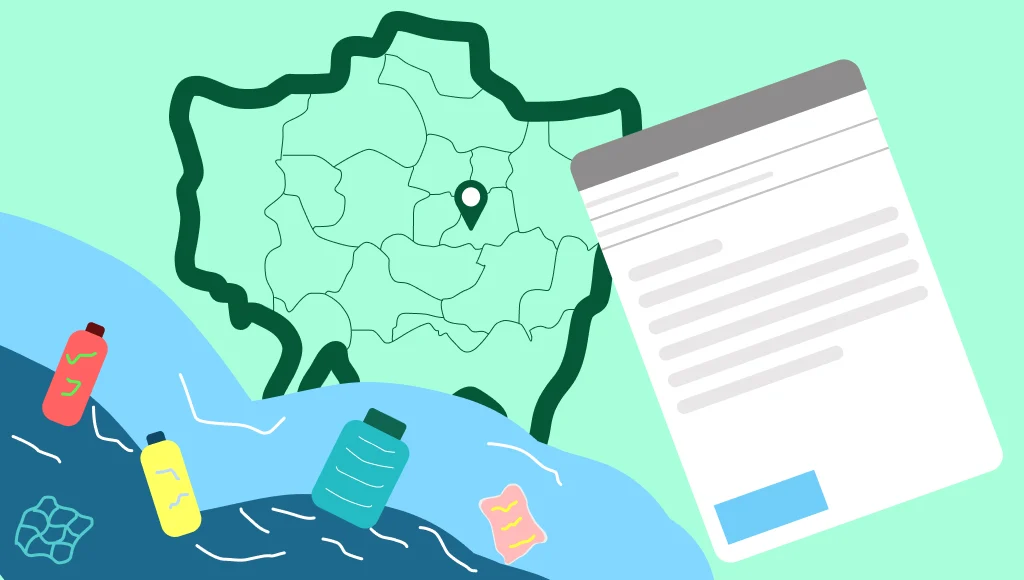
Rather than presenting the issue as a national problem alone, we centred the experience around users' local MPs. By entering their postcode, users could immediately discover whether their MP had pledged support for the Environment Bill and understand what action they could take next.
This transformed an abstract environmental issue into something tangible and actionable.
Working closely with Greenpeace, we facilitated wireframing workshops and collaborative design sessions to map user journeys, identify key decision points, and ensure the platform balanced campaign messaging with usability.
The resulting experience guided users from awareness to action as efficiently as possible.
Balancing information with engagement
Environmental campaigns often face a difficult challenge: providing enough evidence to build credibility without overwhelming users with information.
Through a series of workshops and design sprints, we explored how scientific research, campaign messaging, and political engagement could work together within a single experience.
The platform was designed to surface relevant information when users needed it, while keeping the primary focus on helping them take action.
This balance helped create a tool that was both informative and effective as a campaigning platform.Technical implementation
The platform was built using Laravel and OctoberCMS, providing Greenpeace with a flexible content management system capable of supporting evolving campaign content and messaging.
For the front-end, we used Angular and a custom API architecture that delivered content dynamically as JSON, creating a fast and responsive user experience.
We also implemented a secure authentication process using JSON Web Tokens, allowing MPs to verify and respond to pledge requests through dedicated links generated by the platform.
The result was a lightweight, scalable system capable of supporting a national campaign without unnecessary complexity.Outcome and impact
The platform attracted more than 80,000 visits and generated approximately 40,000 emails to MPs across the UK.
By making political participation simple and locally relevant, the campaign successfully mobilised public support around the proposed Environment Bill and helped keep pressure on elected representatives.
Almost one-third of MPs ultimately pledged support for a stronger Environment Bill, demonstrating the effectiveness of combining research, digital campaigning, and user-centred design.
The project showed how digital tools can help bridge the gap between public concern and political action.